Foundation or higher tier: how to choose for GCSE maths
Tier sets the ceiling and the paper. Pick it on mock evidence and algebra confidence, not on which one sounds better.
Tier is the decision students and parents ask about most, and it is usually framed as a confidence question: "Am I good enough for higher?"
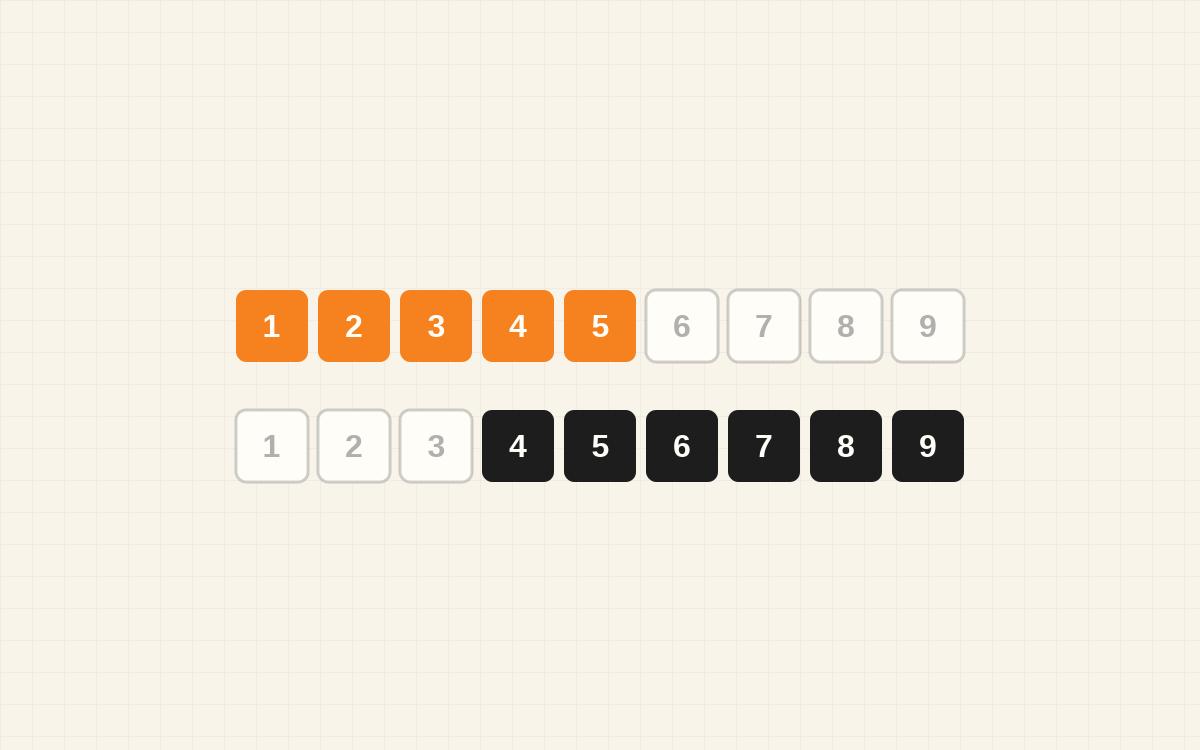
The better question is what each tier lets you leave with. Foundation awards grades 1 to 5. Higher awards grades 4 to 9, with grade 3 allowed for students who just miss grade 4. A grade 5 is a grade 5 on either tier.
What each tier covers
All three boards follow the same Department for Education subject content, so the six areas are the same. The difference is how much of the harder material is assessed and how the marks are weighted.
| Area | Foundation | Higher |
|---|---|---|
| Number | 25% | 15% |
| Algebra | 20% | 30% |
| Ratio, proportion and rates of change | 25% | 20% |
| Geometry and measures | 15% | 20% |
| Probability and statistics | 15% | 15% |
Foundation leans towards number and ratio. Higher leans towards algebra and geometry, and includes content that is not assessed on foundation at all.
That weighting matters more than the label. A student who is strong on number but shaky on algebra may do better on foundation. A student who is comfortable with multi-step algebra may find higher papers more rewarding.
The ceiling and the floor
The trade-off is simple and easy to state:
- Foundation caps your grade at 5. You cannot be awarded a 6, however well you do.
- Higher starts at 4, with grade 3 possible for a near miss. You cannot be awarded a 1 or 2.
So the choice is usually between a secure 5 on foundation and a possible 4 or 5 on higher, with grade 3 as the downside.
That is not a reason to avoid higher. It is a reason to choose on evidence rather than on ambition alone.
The evidence to use
Do not decide from one test, one teacher comment or one anxious week.
- Recent mock papers at each tier. If your school will mark one of each, that is the clearest evidence you can get.
- Algebra performance. Higher tier rewards algebra. If expanding, factorising and solving equations are secure, higher is more realistic.
- Multi-step questions. Look at the last two questions on a higher paper. Can you start them, even if you cannot finish?
- Speed. Higher papers have more marks per minute of thinking. If you run out of time on foundation papers, that is a warning.
- Teacher prediction. Teachers see your work across topics and under exam conditions. Ask what grade they would predict on each tier.
Questions to ask your teacher
- What grade am I currently working at on foundation papers, and on higher papers?
- Is my algebra secure enough for the higher paper?
- Can I finish a paper in 90 minutes, or am I losing marks to time?
- What would you enter me for if the decision were today?
- When is the entry deadline, and can it change after that?
Ask early. Tier decisions are usually made in the spring term, and changing after the entry deadline is not always possible.
How the decision actually gets made
Schools enter students for a tier; students do not enter themselves. That means the conversation matters more than the worry.
- Raise it at a parents' evening or by email, not the week before the exam.
- Bring evidence: mock scores, topics you can do without notes, and how you perform under time.
- If your school recommends foundation and you disagree, ask what would need to change for higher to be realistic.
Do not spend months practising higher papers in secret if you are entered for foundation. The content overlaps, but the paper style and difficulty do not.
If you are near the boundary
The 4/5 boundary is the one that causes most stress.
- A secure 5 on foundation is a strong outcome. It is not a lesser grade because of the tier.
- A grade 4 on higher is also a strong outcome, and it keeps some sixth-form and college routes open.
- A grade 3 on higher is a worse outcome than a 5 on foundation for most students.
If your honest prediction is a 4 or 5 either way, ask which paper gives you the better chance of finishing the questions you can do. That is usually the tier with the weightings that match your strengths.
How to prepare on either tier
The revision is similar: same six areas, same need for timed practice, same value in marking your work.
- Use past papers for the tier you are entered for.
- Do not use the other tier's papers as a substitute for your own.
- Check your board's specification for higher-only content before assuming a topic is safe.
- Use the topics list for the shared content and your board's specification for the tier detail.
The secondary question index lets you practise by topic and level, which is more useful than doing random questions at the wrong difficulty.
The short version
Choose the tier that gives you the best chance of the grade you need, not the one that sounds more impressive. Use two recent papers, a teacher prediction and your algebra confidence. Then commit, and prepare for the paper you are actually sitting.
Practise this now
Put the advice to work with free questions, worked answers and adjustable difficulty.